What Happens if Something Breaks in Temporary Housing?
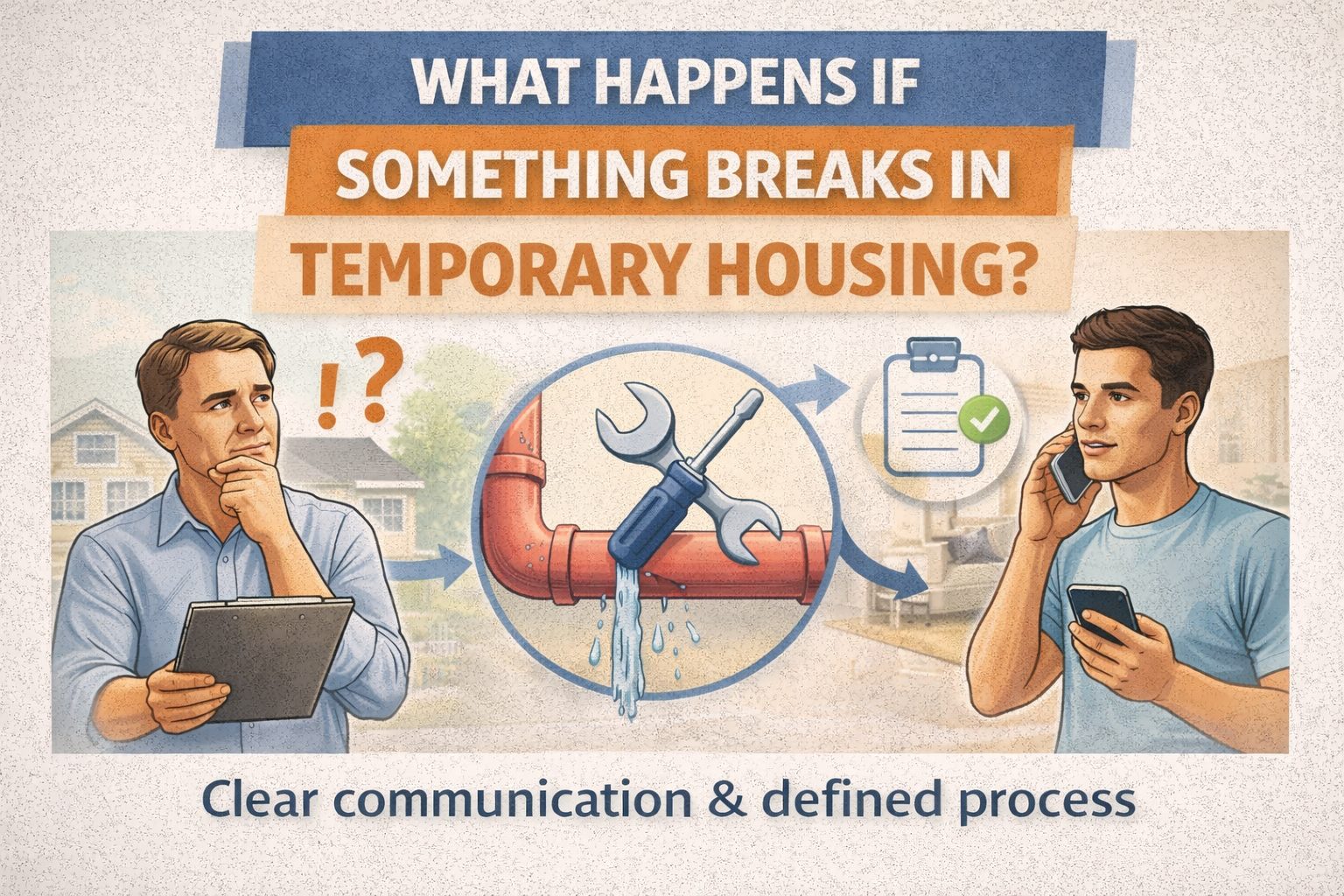
One of the most common questions landlords ask before renting their furnished property is:
“What happens if something breaks?”
It’s a valid concern. Whether it’s an appliance, plumbing issue, or general wear and tear, property owners want to know how problems are handled—and how their home is protected.
The good news is that in temporary housing, maintenance is not left to chance. The process is built around clear expectations, structured communication, and defined responsibilities.
Here’s how it works.
Why Maintenance Matters in Temporary Housing
When you rent out a furnished home, maintenance becomes even more important. You’re not just renting out a space—you’re providing a fully functional living environment.
That includes:
Appliances
Furniture
Utilities
Systems like HVAC, plumbing, and electrical
Keeping everything in good condition helps:
Protect your investment
Maintain the value of your property
Ensure a comfortable stay for tenants
This is why maintenance is taken seriously in temporary housing placements.
Clear Expectations From the Start
One of the biggest differences in temporary housing is that expectations are clearly outlined upfront.
Before a tenant moves in, there is clarity around:
What tenants are responsible for
What landlords handle
How issues should be reported
What the process looks like if something breaks
This reduces confusion and helps avoid misunderstandings later on.
When everyone knows what to expect, the rental experience becomes much smoother.
The Communication Process
If something does break during a temporary housing stay, the process is straightforward.
It typically looks like this:
Issue is identified
The tenant notices a problem (for example, a leaking faucet or appliance issue).Issue is reported
The tenant reports it through the agreed communication channel.Review and coordination
The issue is reviewed, and next steps are determined.Repair is arranged if needed
Maintenance or repairs are scheduled to resolve the issue.
Because the process is already defined, there is no guesswork involved.
Why This Structure Works
Temporary housing is designed to be organized and predictable, and maintenance is a big part of that.
This structure helps:
Prevent small issues from becoming major problems
Ensure faster response times
Keep communication clear and efficient
Maintain the overall condition of the property
Instead of reacting to problems, the process is already in place to handle them.
How This Helps Landlords Feel Confident
For many landlords, uncertainty is the biggest concern when renting their property.
Knowing that:
Maintenance responsibilities are clearly defined
Communication is structured
Issues are handled through a process
…can make a big difference.
It gives landlords:
More confidence in the rental process
Peace of mind during the stay
A clearer understanding of what to expect
When expectations are set upfront, there are fewer surprises.
Temporary Housing vs Unstructured Rentals
In less structured rental models, maintenance can sometimes feel unclear or reactive.
Temporary housing is different because it focuses on:
Defined expectations
Clear communication
Organized processes
This makes it easier for landlords to manage their property without constant uncertainty.
Final Thoughts
So, what happens if something breaks in temporary housing?
It’s handled through a clear, structured process that prioritizes communication and defined responsibilities.
For landlords, this means:
Fewer surprises
Better property protection
A smoother overall experience
Understanding how maintenance works is a key step in deciding whether temporary housing is right for your property.
Have Questions About Maintenance?
If you’re still wondering how maintenance would work for your specific property, that’s completely normal.
💬 Reach out to learn more or ask your questions.
Understanding the process can help you feel more confident about renting your furnished home for temporary housing.
