How Temporary Housing Works for Property Owners
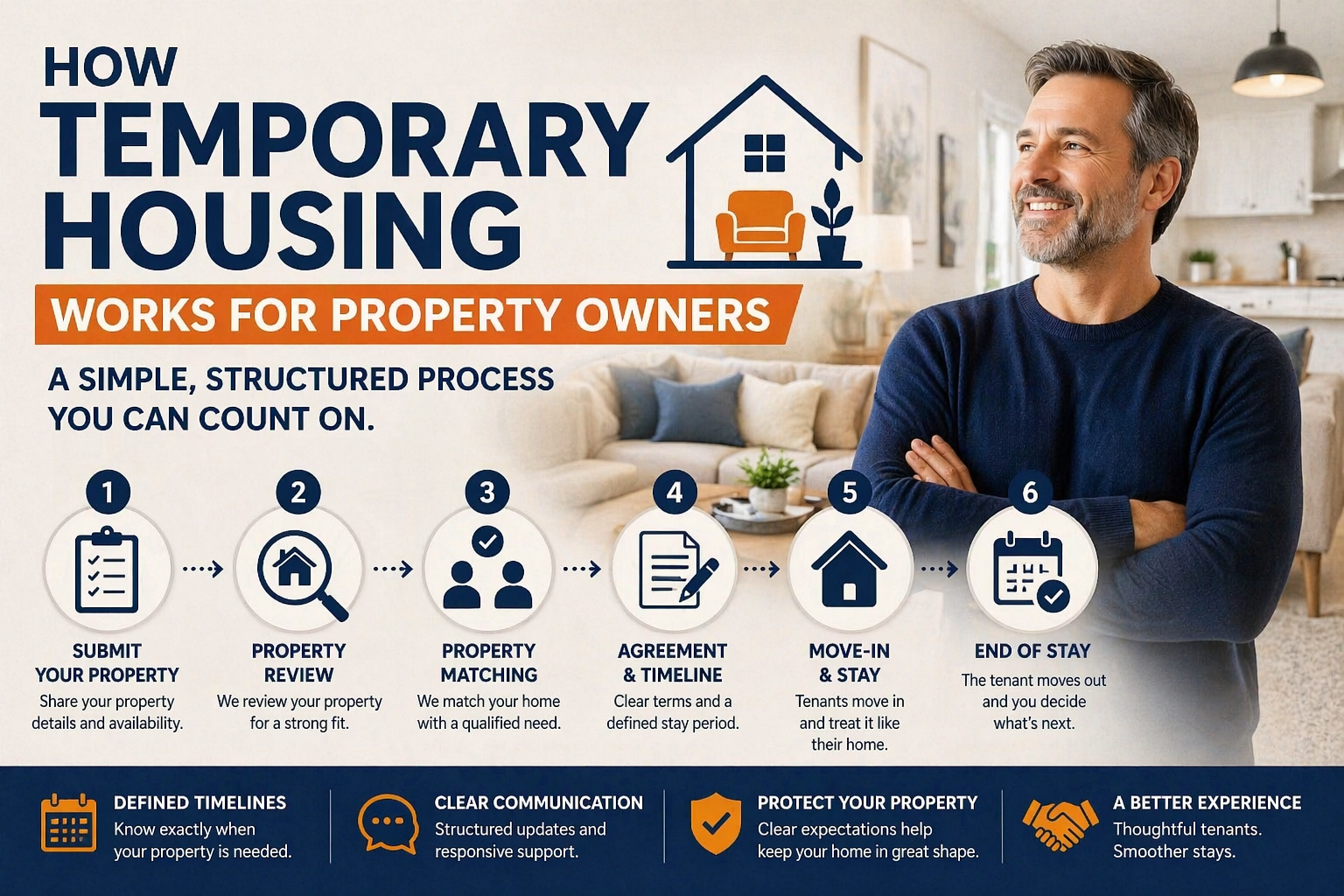
If you own a furnished property, you may have heard about temporary housing—but how does it actually work for property owners?
Many landlords are interested in the idea but aren’t sure what to expect. The good news is that temporary housing is a structured and straightforward process designed to make renting more predictable.
In this guide, we’ll break down what temporary housing is, how it works step by step, and what landlords can expect along the way.
What Is Temporary Housing?
Temporary housing provides fully furnished homes for people who need a place to stay for a defined period, usually around 3 to 6 months.
These tenants are often:
Families in transition
Professionals relocating
Individuals needing short-term living arrangements
Unlike vacation rentals, temporary housing focuses on everyday living, not short stays.
Tenants typically treat the property as their primary home during their stay.
Step-by-Step Process
Understanding the process can help landlords feel more confident. Here’s how temporary housing typically works:
Step 1: Submit Your Property
The process starts when you submit your furnished property.
You’ll provide details such as:
Location
Number of bedrooms and bathrooms
Furnishings and amenities
Availability
Your property is added to an internal system used for matching—not publicly listed.
Step 2: Property Review
Your property is reviewed to determine if it’s a good fit.
This includes:
Checking if the home is fully furnished
Ensuring it’s move-in ready
Evaluating location and livability
This step helps ensure quality placements.
Step 3: Property Matching
Temporary housing is need-based.
When a request comes in, properties are matched based on:
Size and layout
Location
Availability
Tenant needs
The goal is the right match, not just filling the property.
Step 4: Agreement and Timeline
Once matched, a temporary housing agreement is set.
This includes:
Defined start and end dates
Rental terms
Property expectations
Most stays last around 3 to 6 months, giving landlords clear timelines.
Step 5: Move-In and Stay
The tenant moves into the furnished home and uses it as their primary residence.
During the stay:
Communication is structured
Maintenance is handled through a clear process
Expectations are already defined
Step 6: End of Stay
At the end of the placement:
The tenant moves out
The property becomes available again
The landlord can decide next steps
This could include another placement or a different rental strategy.
What Landlords Can Expect
Temporary housing is designed to be predictable and manageable.
Landlords can typically expect:
Defined rental periods
Clear communication
Structured agreements
Thoughtful tenant matching
Because the process is organized, many landlords find it easier to manage than less structured rental options.
Why Structure Matters
The biggest difference in temporary housing is structure.
Instead of uncertainty, you have:
Clear timelines
Defined responsibilities
Established communication
Organized processes
This structure helps:
Reduce misunderstandings
Protect the property
Create smoother rental experiences
For many landlords, this is what makes temporary housing appealing.
Final Thoughts
Temporary housing is not complicated—it’s simply more structured than traditional renting or short-term stays.
By focusing on:
Clear expectations
Defined timelines
Thoughtful matching
…it creates a more predictable experience for property owners.
If you have a furnished home, temporary housing may be a practical way to keep your property occupied while maintaining flexibility.
Curious If Your Property Is a Good Fit?
If you’re considering temporary housing but aren’t sure where to start, that’s completely normal.
💬 Reach out to learn more or see if your property qualifies.
A quick conversation can help you understand your options and decide what works best for your property.
